
02 / Design Engineer and Founder
A safe space for medical students to learn from their mistakes.
Context
Teaching clinical reasoning with simulated clinics.
Medical school teaches the facts well and the judgement badly because judgement needs patients, and patients are the one thing a curriculum cannot hand out.
Pain
20students : 1patient
Fifteen minutes with one patient.
Live patients teach best, and logistics ration them.
Solution
AI plays the patient.
The student talks, examines, tests, treats — then sees where the reasoning broke, and goes again.
Outcomes
Unlimited patients
on demand
A case costs a doctor nothing to run, so a student can be wrong as often as it takes.
We wanted a way to make clinical reasoning visible and teachable — and give students a tool where they don't just receive knowledge, but build it through experience.
What we heard
Lack of real cases hurts medical learning.
Students describe theory they cannot apply and exams they do not feel ready for. Their teachers agree that cases are the answer, and cannot find the hours to build them.
I am not confident in my clinical exams and they are very stressful
Lectures are lengthy and boring

Student
We often have to refer 4000 page textbooks to make sense of the concepts
I don't know how this applies to the real world
Cases are the most important method of teaching I can think of but students don't get enough practice

Doctor
I don't have the time needed to prepare cases for my classroom teaching
Medical learning today
Only 20% is hands-on learning.
Lectures and textbooks build recall, and recall is what gets examined. The competence the job needs is built at the bedside — which is the smallest slice of the week, and mostly spent watching someone else decide.
What a case carries
What if every student and teacher had a patient?
Access to unlimited patient cases lets teachers teach and students learn through the lens of patient care.
- History

- Diagnosis


Patient case
 Tests
Tests Treatment
Teacher
Teaching using a patient case allows me to teach and explain concepts through the lens of patient care
Student
Applying what I learn helps me understand and retain the subject better
What we built
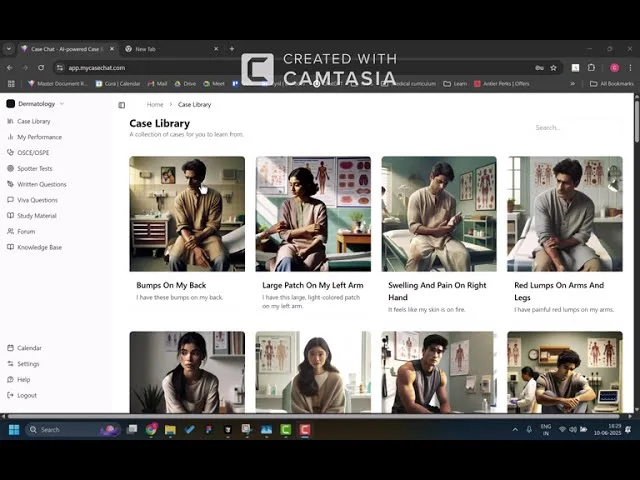
A virtual clinical environment with unlimited patients is better.
A virtual clinic lets students practise every stage of patient care — from history-taking to treatment — without real-world constraints.
Inside the clinic
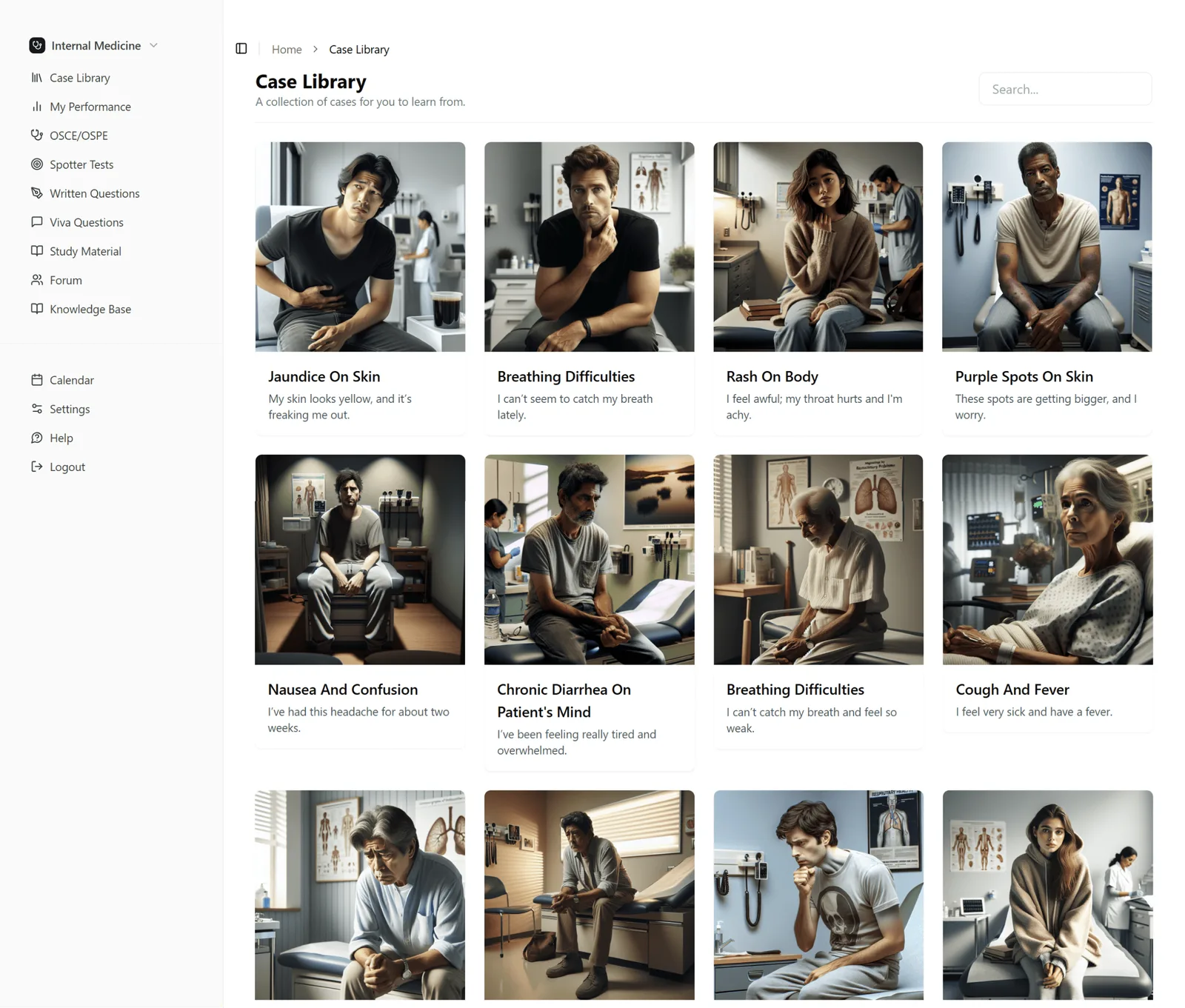
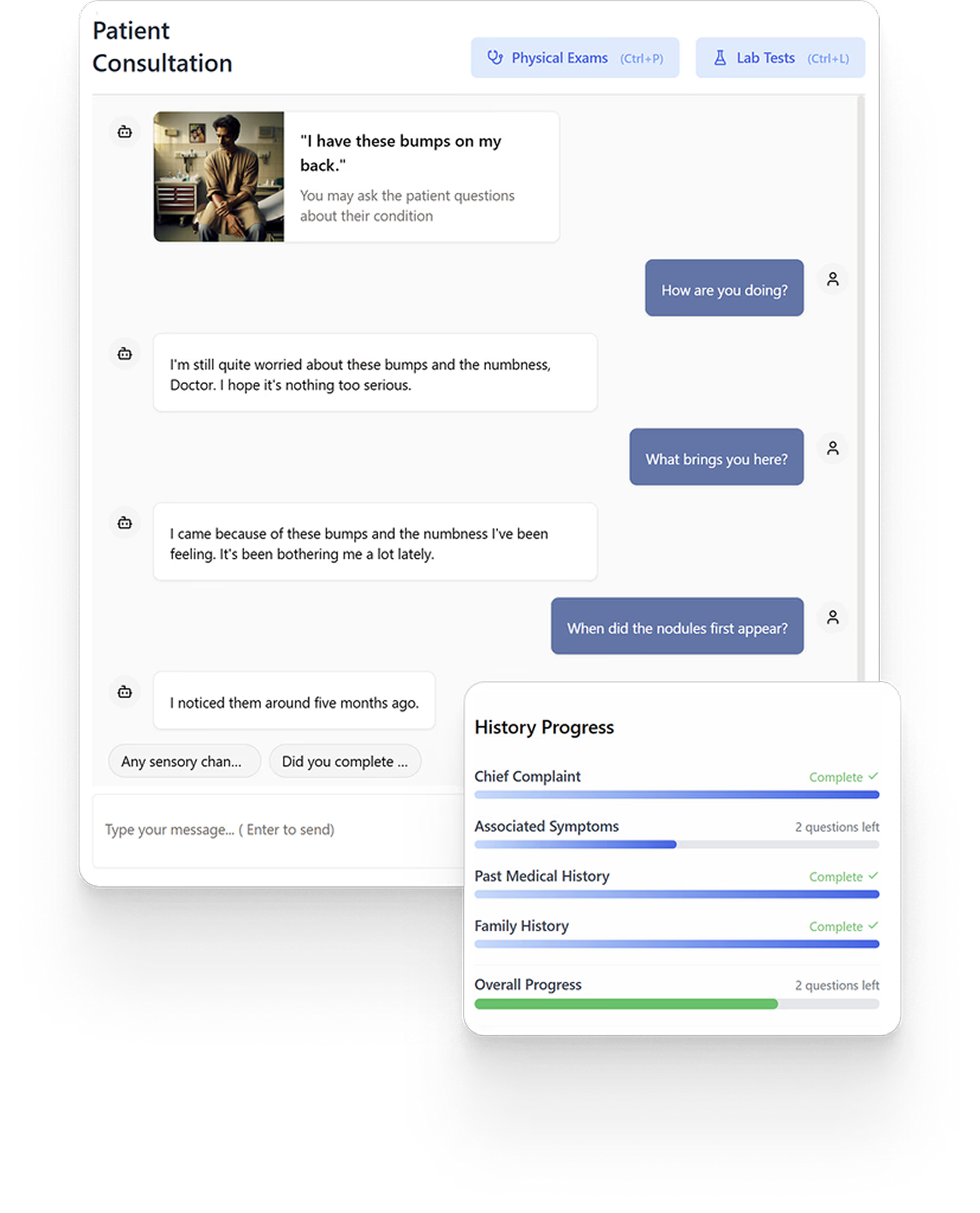
- The AI patient is prompted to answer in plain language and never give the diagnosis away.
- Students often did not know how to begin, so the screen suggests ways to open the conversation.
- A progress panel shows how much of the interview is done, and what is still missing.
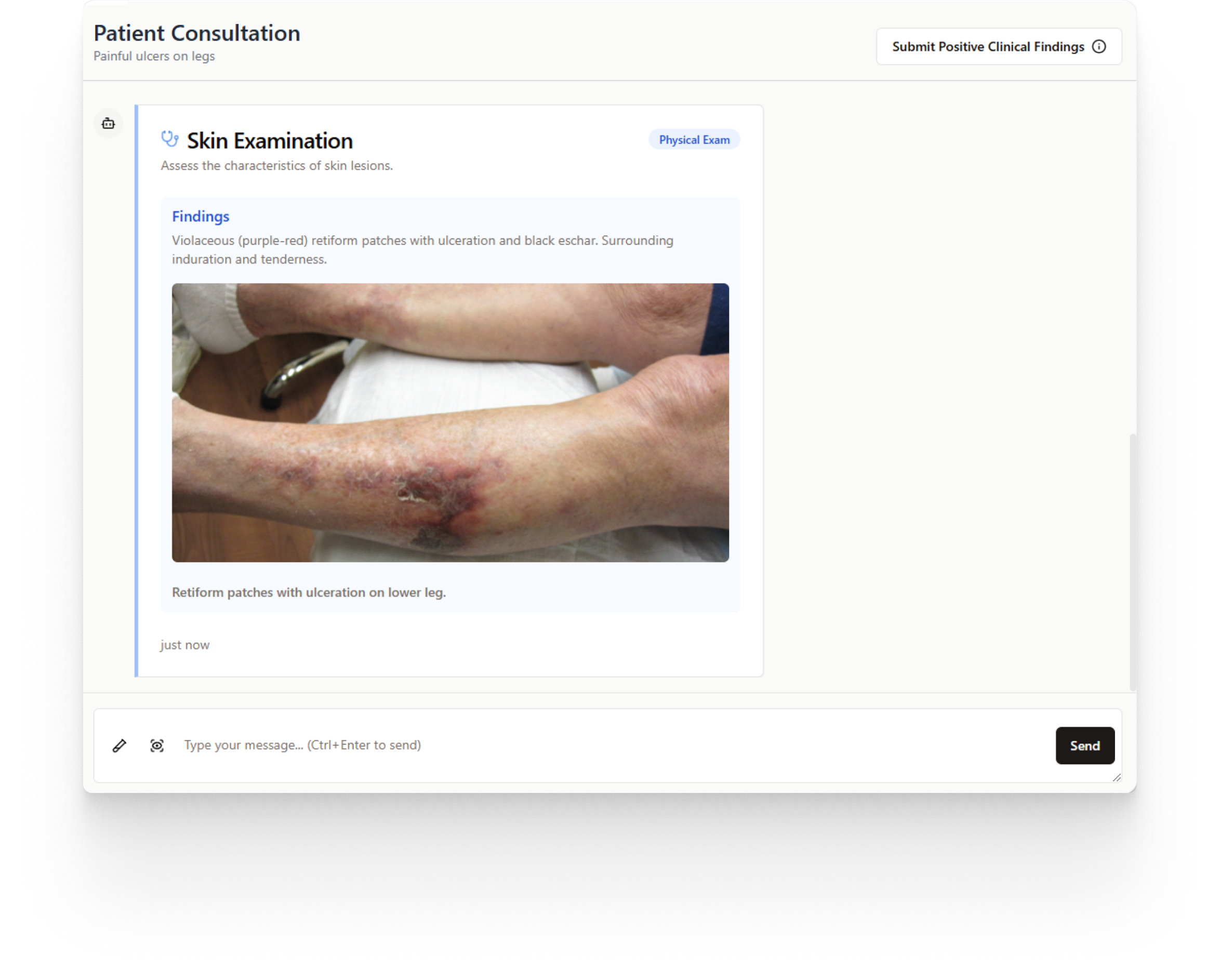
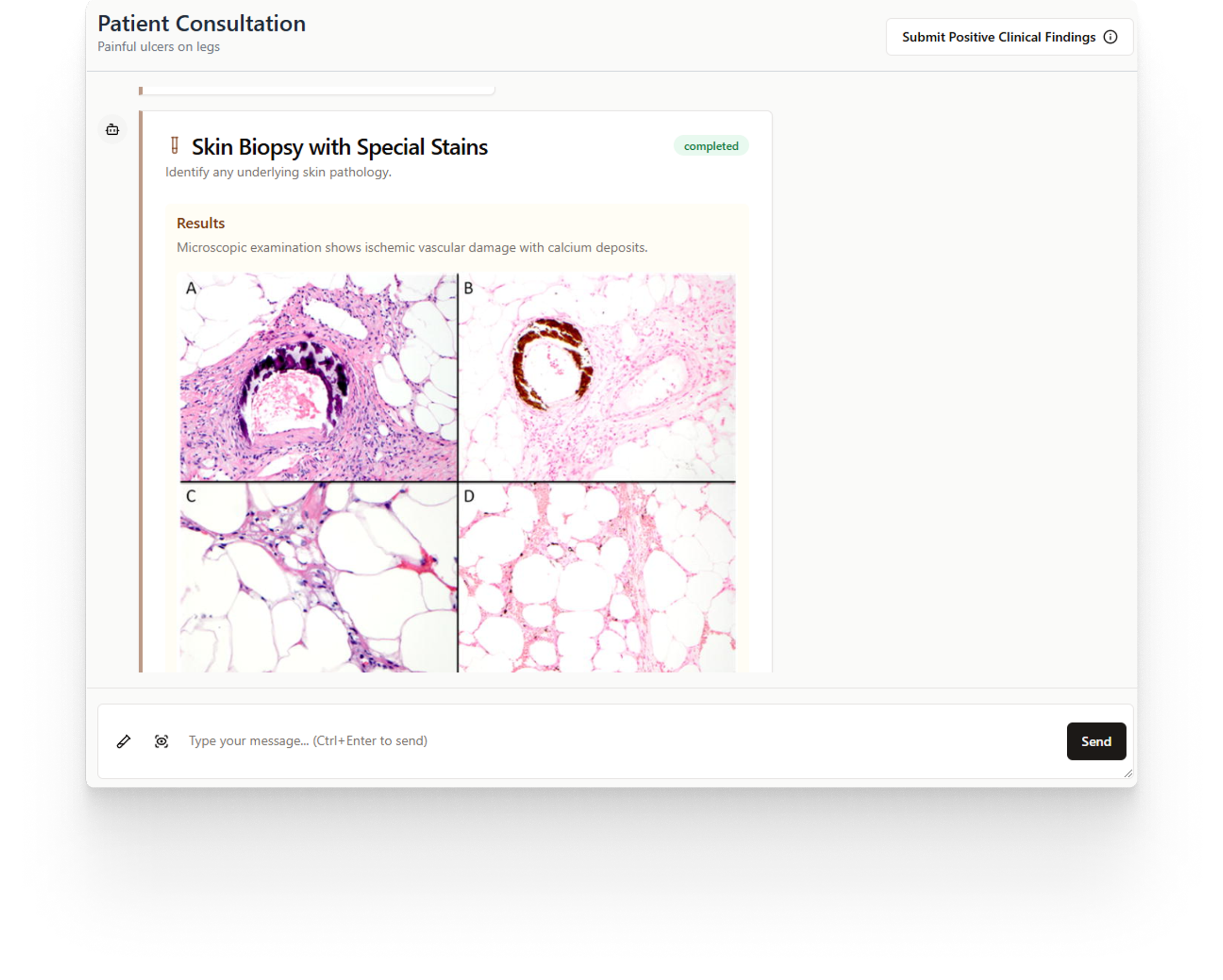
- Requesting an exam returns a real photograph, not a written verdict.
- Results come back as images to interpret, so the judgement stays with the student.
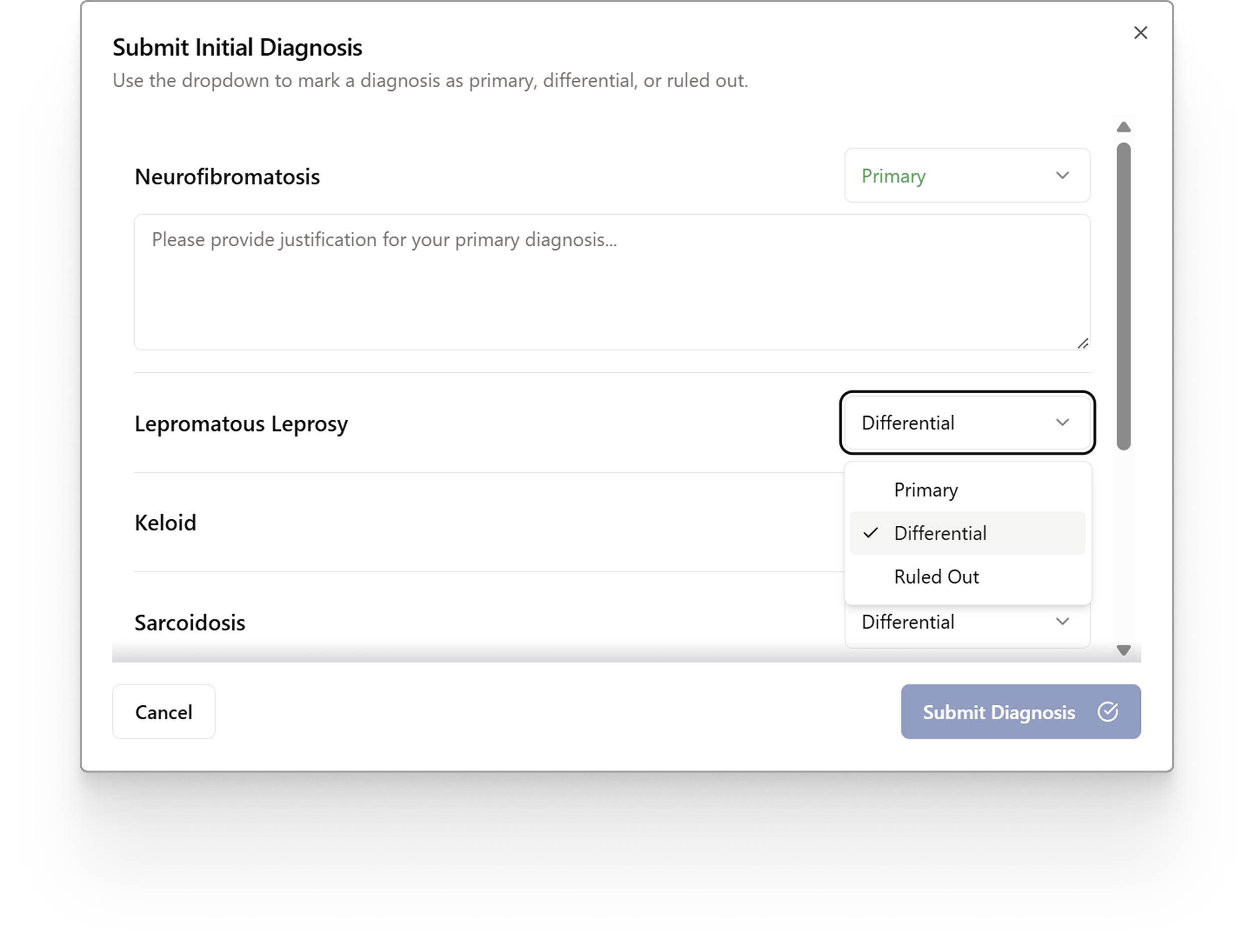
- An answer is not accepted until the reasoning behind it is typed alongside.
- Plausible wrong answers are mixed in, so every option has to be judged rather than skimmed.
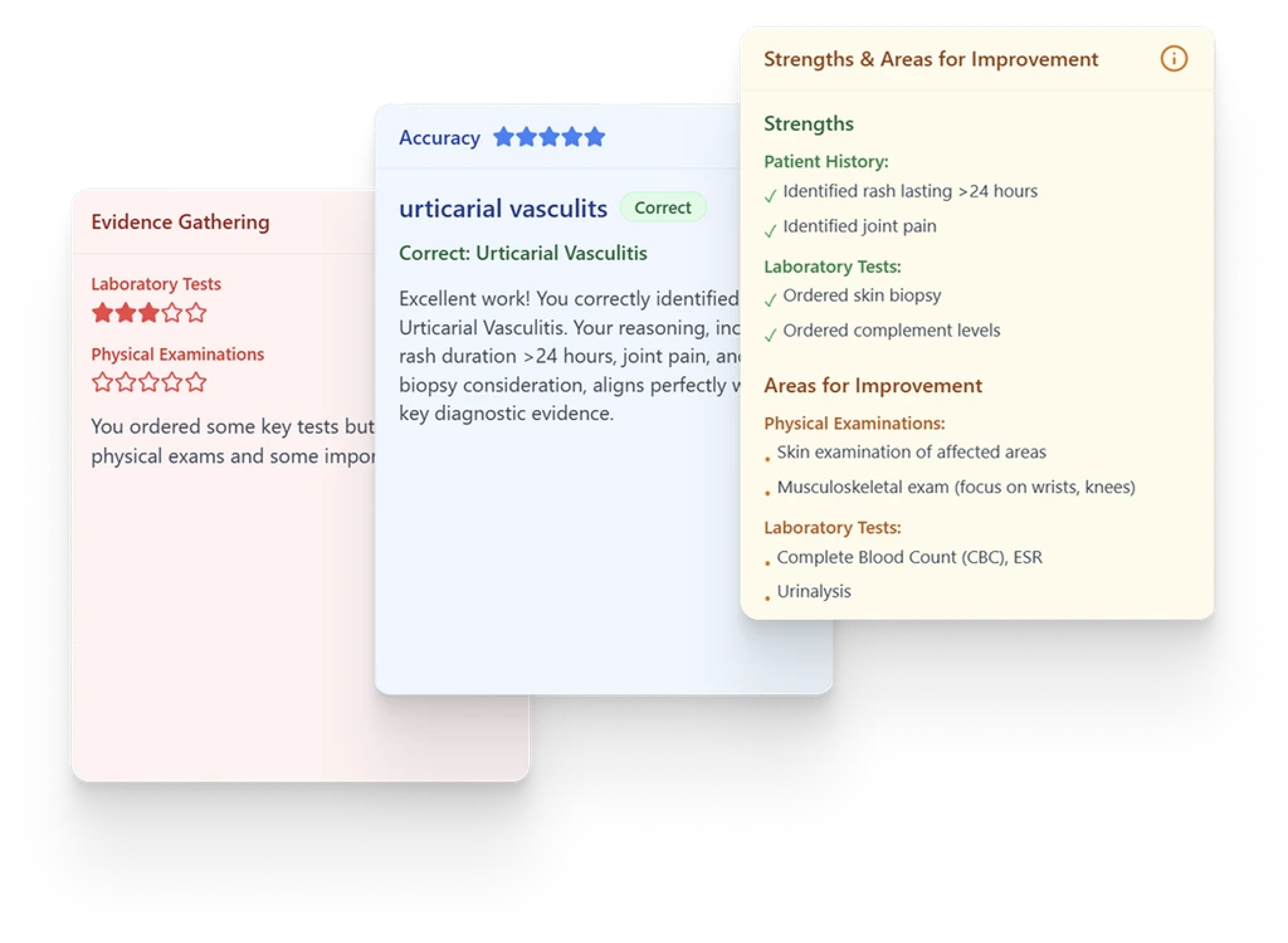
- One score for how thoroughly they gathered evidence before deciding.
- Another for whether the call was right, with their reasoning quoted back to them.
- And the steps they skipped, so the feedback names the gap and not just the grade.
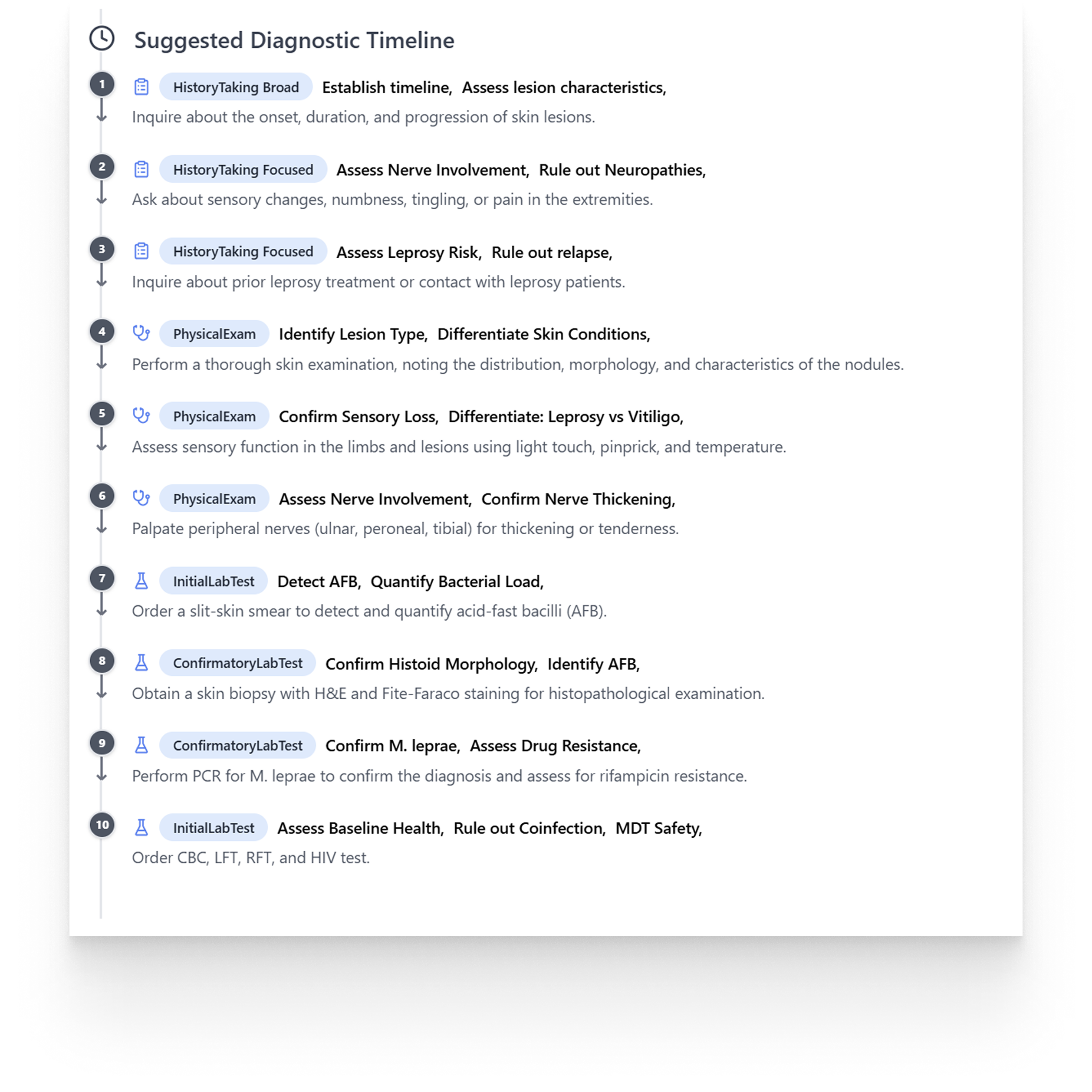
- The path is numbered, so the order an expert would have worked in is visible.
- Each step is tagged by type, so the kind of task reads before the words do.
- Heading first, detail under it, so the path can be scanned instead of read.
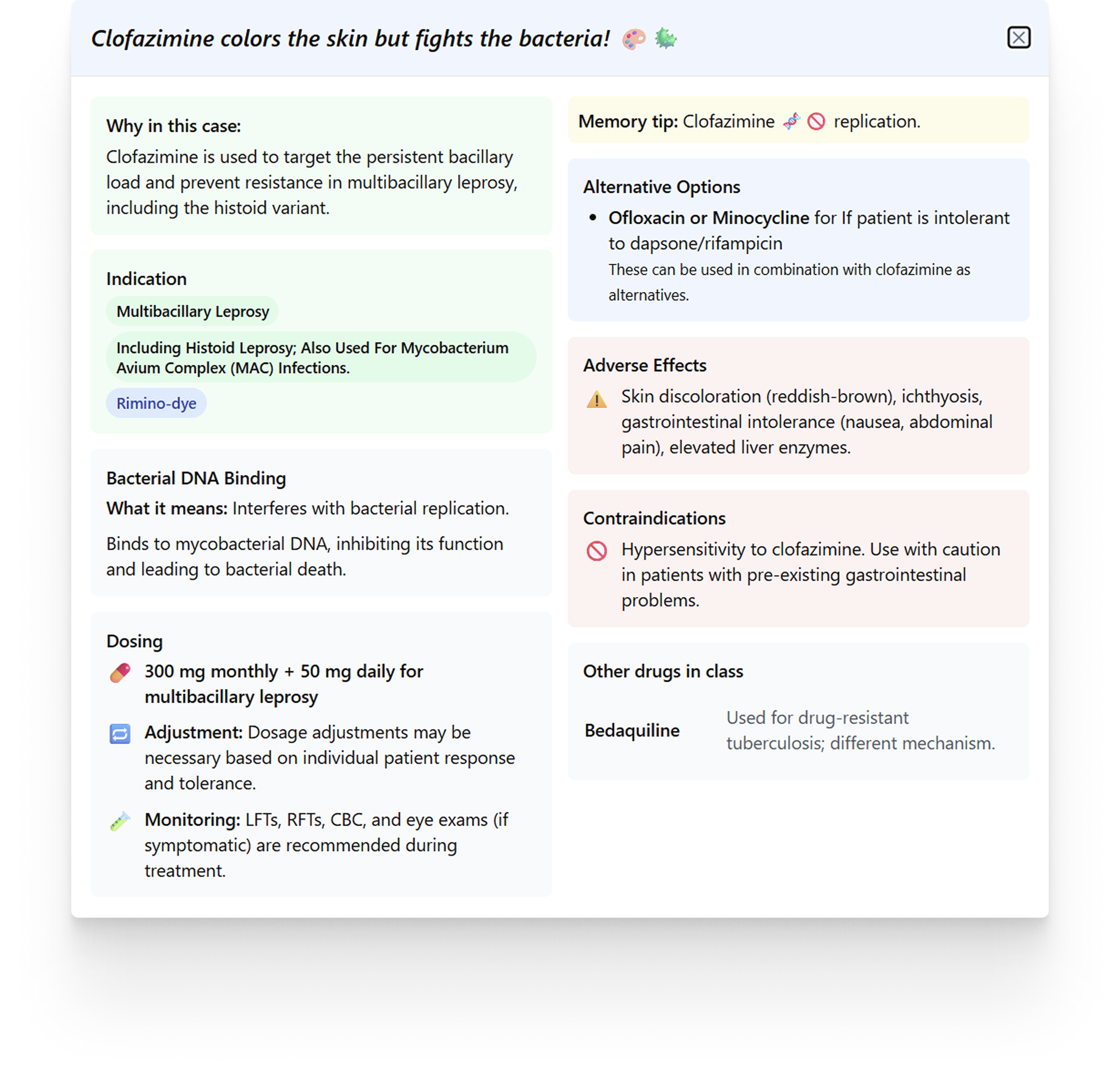
- A memory hook sits at the top, because recall is what gets tested.
- Why it matters here comes first, ahead of the reference detail.
- Warnings and cautions earned their place in user testing.
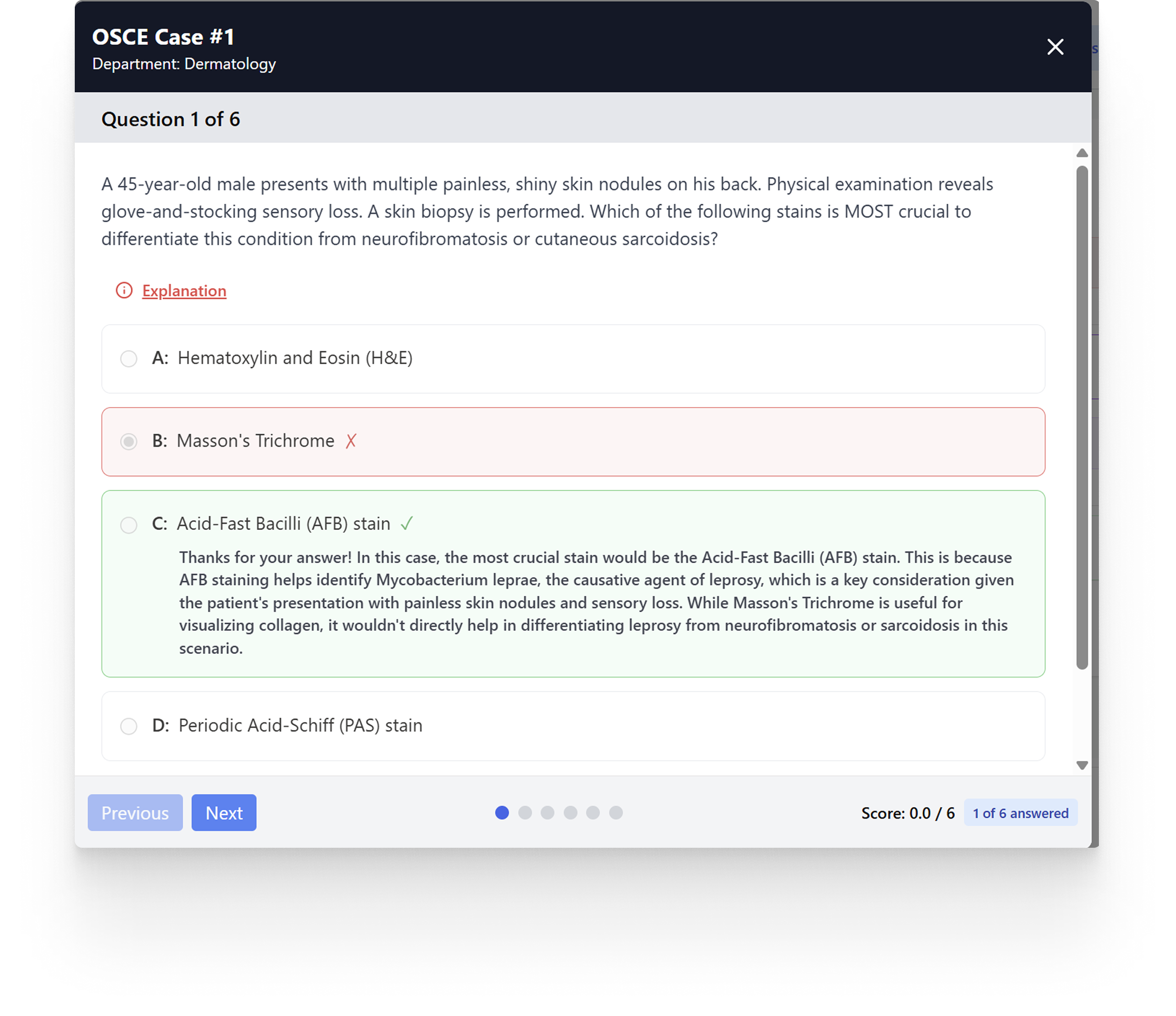
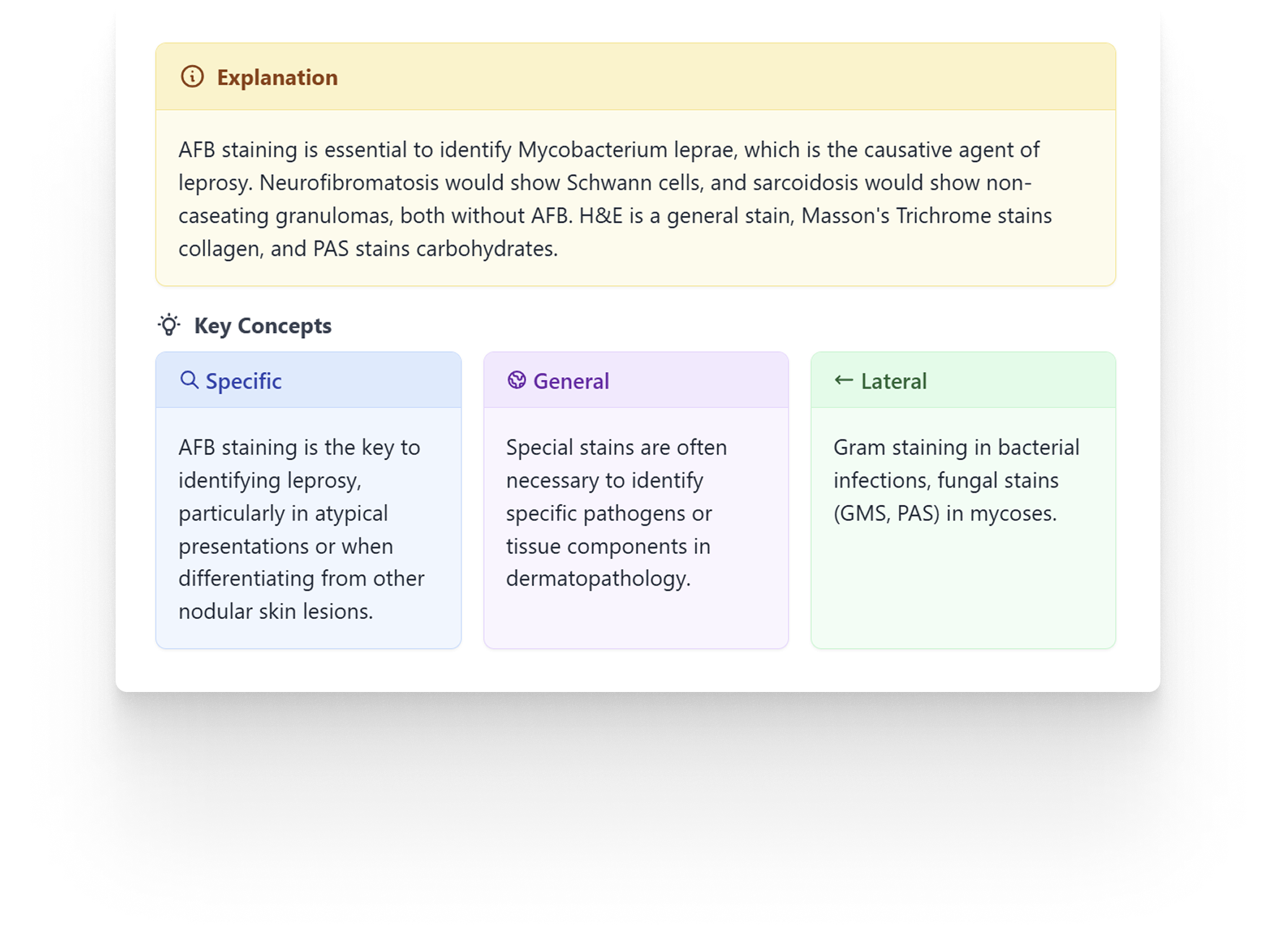
- Opening the explanation teaches the idea behind the answer, not just which option was right.
- Questions are modelled on the real exam, and every option carries its own explanation.
We thought students wanted to think like doctors — but they were trying to succeed as students. Success in exams was critical for that.
What moved the needle
Getting better at exams was the most important thing.
Students appreciated the learning, and valued retention and practice more. Shaping the assessments like the ones they actually sit raised engagement and outcomes together, rather than trading one for the other.